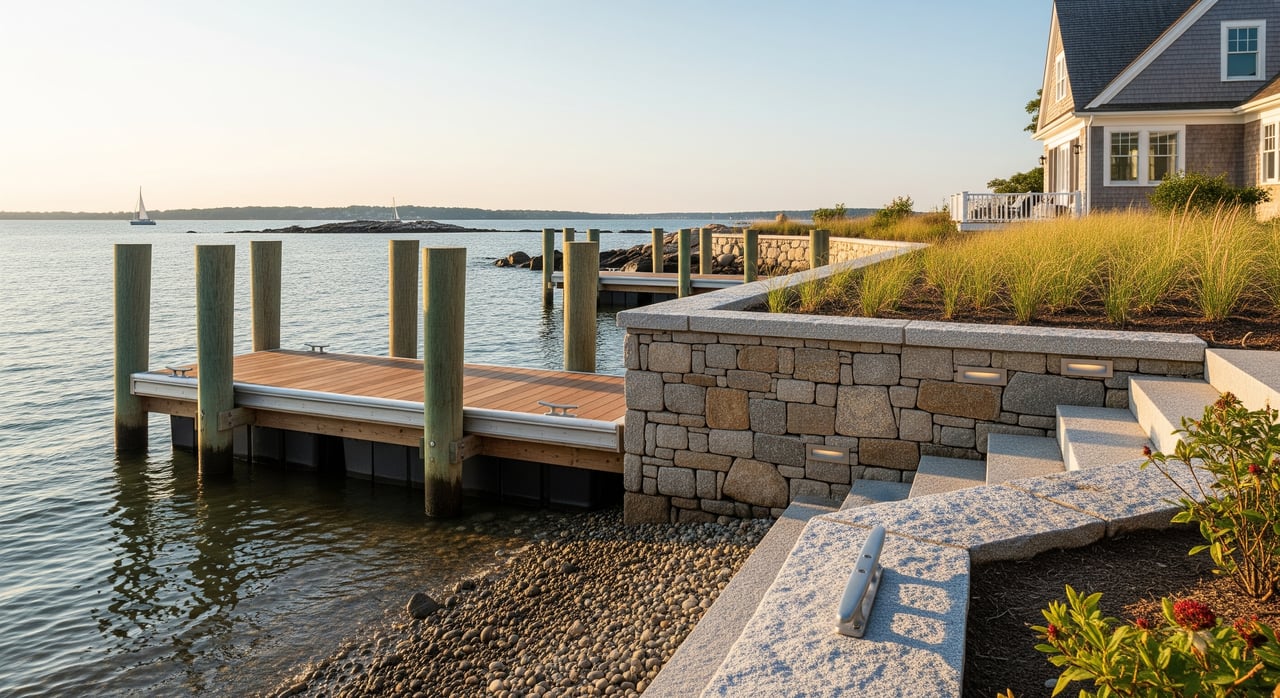
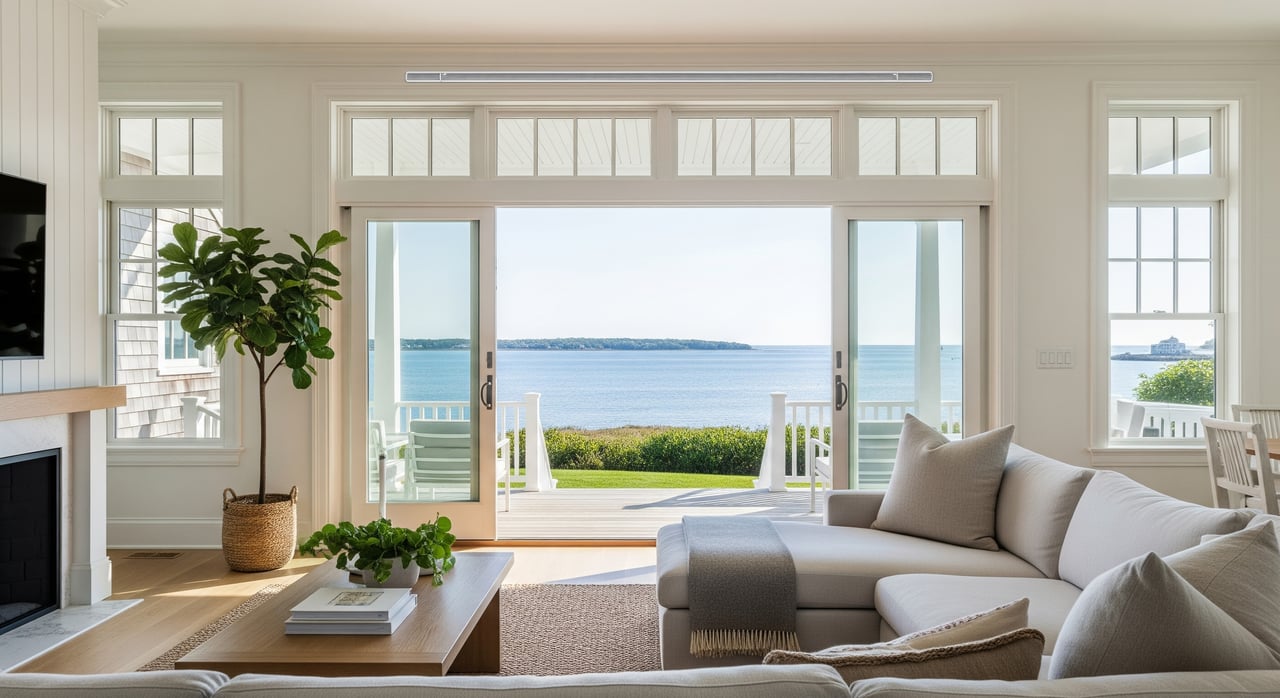
If you own or are buying waterfront in Branford, a dock or seawall can elevate how you use the property and protect your shoreline. These projects also require careful planning. Permits, design, and timing all connect, and getting them right will save you time, money, and stress.
What to know before you build
Building in the coastal zone is not like a typical backyard project. In Connecticut, the state regulates work waterward of the Coastal Jurisdiction Line and in tidal wetlands, while the town handles building, local wetlands, and harbor issues. That means most docks and many shoreline structures need local, state, and sometimes federal approvals. It is manageable with the right plan, but you want to start early and follow the sequence.
Connecticut’s coastal program explains the big picture: submerged lands below mean high water are held in public trust, and activities waterward of the Coastal Jurisdiction Line require authorization from the Department of Energy and Environmental Protection, known as DEEP according to the state’s coastal permit overview. In Branford, the Coastal Jurisdiction Line along Long Island Sound is 4.3 feet NAVD88, which is the elevation used to decide when state review applies per DEEP’s CJL fact sheet.
The takeaway: plan your design and approvals together. It will shape your budget, timeline, and eventual market value.
Define site and project goals
Before you call a contractor, capture what your site can support and what you need the structure to do.
Assess shoreline conditions
- Exposure and fetch: Open-water sites take heavier waves and ice. Protected coves allow lighter construction.
- Tides, depth, and bottom: Measure typical water depths at mean low water, note rock or soft mud, and identify any eelgrass or submerged vegetation. Avoiding sensitive resources speeds approvals as DEEP’s residential dock guidance stresses.
- Access and staging: Narrow lanes, cliffed banks, or wetlands increase construction complexity and cost.
- Existing structures: Photograph and document what is there today. Maintenance of an authorized, existing structure may qualify for a streamlined DEEP Certificate of Permission per DEEP guidance.
A licensed surveyor can locate mean high water and the Coastal Jurisdiction Line on your parcel so you know exactly where state jurisdiction begins per DEEP’s technical guidance.
Set use and performance needs
- Vessel and draft: The size, draft, and number of boats drive dock length, float size, and lift choices.
- Swim and kayak access: Consider ladders, platforms, and clear water depth at low tide.
- Durability vs maintenance: Choose systems and materials that match wave energy, ice, and your maintenance tolerance.
- Environmental sensitivity: Lower-impact designs that minimize shading and avoid wetlands or submerged vegetation tend to move faster through review per DEEP’s dock guidelines.
Respect property boundaries
- Side lines and view corridors matter. Docks and walls must fit within your littoral rights and not block navigation or public trust access below mean high water as DEEP notes.
- If an easement or shared access exists, bring that documentation to your designer. It can change the layout and the approvals.
Permits and approvals overview
You will likely coordinate three levels: Town of Branford, State of Connecticut, and U.S. Army Corps of Engineers. Getting the order right avoids delays.
Map the approval pathway
- Pre-application due diligence
- Locate mean high water and the Coastal Jurisdiction Line on your survey. In Branford, CJL is 4.3 feet NAVD88 per DEEP’s CJL fact sheet.
- Review FEMA flood maps as part of your building planning. Branford’s building permit checklist points applicants to FEMA mapping and other prerequisites see the town checklist.
- Request a DEEP pre-application meeting to confirm the right permit path and identify tidal wetlands, submerged vegetation, shellfish areas, and navigation constraints recommended in DEEP guidance.
- Local filings and coordination
- Building Department: If work extends waterward of the CJL, you will need to provide DEEP authorization along with your building permit materials. The town also directs applicants to coordinate with relevant civic associations and the health district where applicable per Branford’s checklist.
- Inland Wetlands & Watercourses Agency: If your plans touch regulated areas, Branford’s IWWA has a clear process and can advise on whether an application is required see IWWA process.
- Harbor Master: Contact the Harbor Master early to review navigation, moorings, and harbor rules. Branford actively enforces mooring regulations per the town’s Harbor Master page.
- State permits through DEEP
- Certificate of Permission: For maintenance or minor work on authorized, existing structures. DEEP indicates decisions often occur within 45 days when complete per dock guidance.
- General Permit: Streamlined for low-impact docks that meet strict size and location criteria. Complete registrations are often processed in roughly three months, depending on complexity per DEEP FAQs.
- Individual Structures, Dredging & Fill permit: Required for most new docks beyond GP limits and many new seawalls. Reviews commonly run 6 to 12 months and may involve public notice or hearings per DEEP dock guidance.
- Federal authorization
- The U.S. Army Corps of Engineers regulates work in navigable waters. In Connecticut, the New England District coordinates with state agencies. Contact the regulatory division early to confirm whether your project falls under a general or individual permit pathway USACE Connecticut page.
- Shellfish and public trust considerations
Plan your documentation
Expect to submit:
- Sealed site plan and survey with CJL and mean high water clearly shown per DEEP’s CJL technical report
- Engineering drawings and details for piles, pier, ramp, float, or bulkhead
- Photographs from multiple angles at low and high tide
- Notes on tidal wetlands, submerged vegetation, and shellfish proximity per DEEP guidance
- Construction methods, access plan, and erosion controls
- For repairs, proof the structure was authorized and built as permitted for Certificate of Permission eligibility per DEEP guidance
Avoid common compliance risks
- Do not start work before all required approvals are in hand. In coastal areas, after-the-fact permits are difficult and uncertain.
- Do not assume an old structure is grandfathered. Only narrow pre-1939 cases qualify, and most changes need authorization per DEEP guidance.
- Keep thorough records. Save approvals, inspection notes, and as-built photos. You will need them for future maintenance and resale.
Design options and materials
A smart design balances your needs with site conditions and review criteria. Lower-impact designs often move faster and cost less to maintain.
Dock configurations to consider
- Fixed pier to a small float: A common Connecticut layout is a narrow fixed pier to mean low water with a gangway to a float around 10 by 10 feet, sized to criteria and away from wetlands and submerged vegetation outlined in DEEP’s guidance.
- General Permit thresholds: GP docks are capped in size and extent. DEEP notes typical limits such as a maximum of 220 square feet waterward of mean high water and limits on how far into deeper water you can extend, with no submerged vegetation or tidal wetlands present per DEEP guidance.
- Boat lifts and accessories: These may require specific review and can affect overall dimensions. Keep components minimal to maintain compliance and reduce shading.
Shoreline protection choices
- Seawalls and bulkheads: Repairs in place are often allowed for authorized structures. Pushing a wall seaward is limited, and new vertical walls face strict tests. Oversheeting is typically constrained to small increments where justified per DEEP’s coastal program overview.
- Rock revetments, sills, and living shorelines: Hybrid or softer solutions can reduce wave energy while improving habitat. Regulators often favor these where feasible.
- Public access and clearance: Fixed piers often must maintain height and clearance so the public can pass below at certain tides per DEEP guidance.
Material durability and care
- Structural: Timber piles, steel, helical piles, or concrete each bring different lifespans and costs. Choose for loads, ice, and exposure.
- Decking: Composite or hardwood reduces maintenance. Open-grate decking can improve light transmission over sensitive areas.
- Hardware: Marine-grade stainless fasteners and galvanized connections resist corrosion and extend service life.
Budget, timing, and maintenance
Cost drivers to expect
- Design and size: Larger docks, taller walls, or longer access piers require more material and engineering, which raises cost.
- Site and access: Rock excavation, barge access, or tight staging areas add time and labor.
- Regulatory path: Projects that qualify for a Certificate of Permission or General Permit typically cost less to permit than full individual permits per DEEP FAQs on process.
- Construction: For planning, many owners use broad ranges for seawalls from minor repairs into the hundreds per linear foot and full replacements reaching into four figures per foot depending on material and site. Your actual cost depends on local conditions; secure multiple written bids and compare scope apples to apples.
Build a contingency into your budget. Coastal work can uncover hidden conditions.
Project timeline basics
Maintenance and insurance plans
- Inspect annually and after major storms. Tighten hardware, check piles and tiebacks, and photo-document conditions.
- Keep permits, approvals, and as-builts in one file. You will need them for future maintenance authorizations.
- Review insurance with your carrier. Some policies require proof of maintenance and compliant installation.
Impact on property value
A well-designed, fully permitted dock or shoreline system increases usability and market appeal. Clear documentation, transferable approvals, and maintenance records make due diligence easier for buyers, which can support stronger pricing.
Build your project team
Who you will need
- Licensed land surveyor: Maps CJL and mean high water and provides the base plan per DEEP technical guidance.
- Coastal or structural engineer: Designs the dock or seawall to site conditions and agency criteria see DEEP dock guidelines.
- Marine contractor: Executes the work and understands Branford’s local logistics and DEEP/USACE expectations.
- Environmental specialist: Identifies wetlands, submerged vegetation, and potential mitigation needs.
- Real estate advisor: Aligns improvements with market goals, resale documentation, and potential valuation.
Vet and compare bids
- Scope clarity: Confirm pile types, lengths, decking, hardware, and access plan are specified.
- Schedule and sequencing: Look for realistic permitting and build windows.
- Change-order process and warranty: Require written terms.
- References: Ask for DEEP and town project examples in Branford or nearby shoreline towns. Branford’s Inland Wetlands office provides helpful process resources and forms you can review when interviewing firms town IWWA resources.
Coordinate communication
Set one point of contact to manage submittals and responses. Hold short check-ins at each milestone: survey complete, design 50 percent, pre-application feedback received, formal submission, and permit conditions review.
Next steps for waterfront owners
- Document your site with tide-timed photos and existing-condition notes.
- Order a survey showing CJL and mean high water.
- Define your goals and must-haves for access, vessels, and protection.
- Schedule a DEEP pre-application call to confirm your permit path as DEEP recommends.
- Contact Branford’s Building Department, Inland Wetlands, and the Harbor Master to align local requirements town building checklist and Harbor Master.
- Get two to three qualified marine firms to review your site and provide written proposals.
When you are ready to discuss how a compliant dock or shoreline improvement could fit into your long-term plans or your listing strategy, reach out. A well-documented, permitted waterfront improvement can be a meaningful asset at resale.
If you want tailored advice on market impact, documentation, or packaging a waterfront listing in Branford, connect with the team that understands both the shoreline and the market. Request a consultation with Frank D'Ostilio Houlihan Lawrence to align your project with smart property decisions.
FAQs
Do I need a state permit for my dock in Branford?
- If any part of the work is waterward of the Coastal Jurisdiction Line or in tidal wetlands, DEEP authorization is required. Branford’s CJL is 4.3 feet NAVD88 per DEEP’s CJL fact sheet.
What is the fastest state path for a simple project?
Who else besides DEEP will review my project?
- Expect the Town of Branford Building Department, Inland Wetlands & Watercourses Agency, and the Harbor Master to be involved. The U.S. Army Corps of Engineers may also require authorization for work in navigable waters town building checklist and USACE Connecticut page.
Can I replace my seawall in the same place?
- Repairs and like-for-like replacement of authorized walls are often allowed. Moving the wall seaward is limited, and new vertical walls face stricter tests. Hybrid or softer approaches may be preferred where feasible per DEEP’s coastal permit overview.
How long will approvals take?
What documents should I keep for resale?
- Keep surveys, permits, approvals, as-built drawings, inspection notes, contractor warranties, and dated photos. These records support maintenance and help buyers verify compliance.
Who do I contact first to get started?
- Start with a surveyor to map CJL and mean high water, then schedule a DEEP pre-application meeting. In parallel, call Branford’s Building Department, Inland Wetlands, and the Harbor Master to align local steps DEEP dock guidance, town building checklist, and Harbor Master.