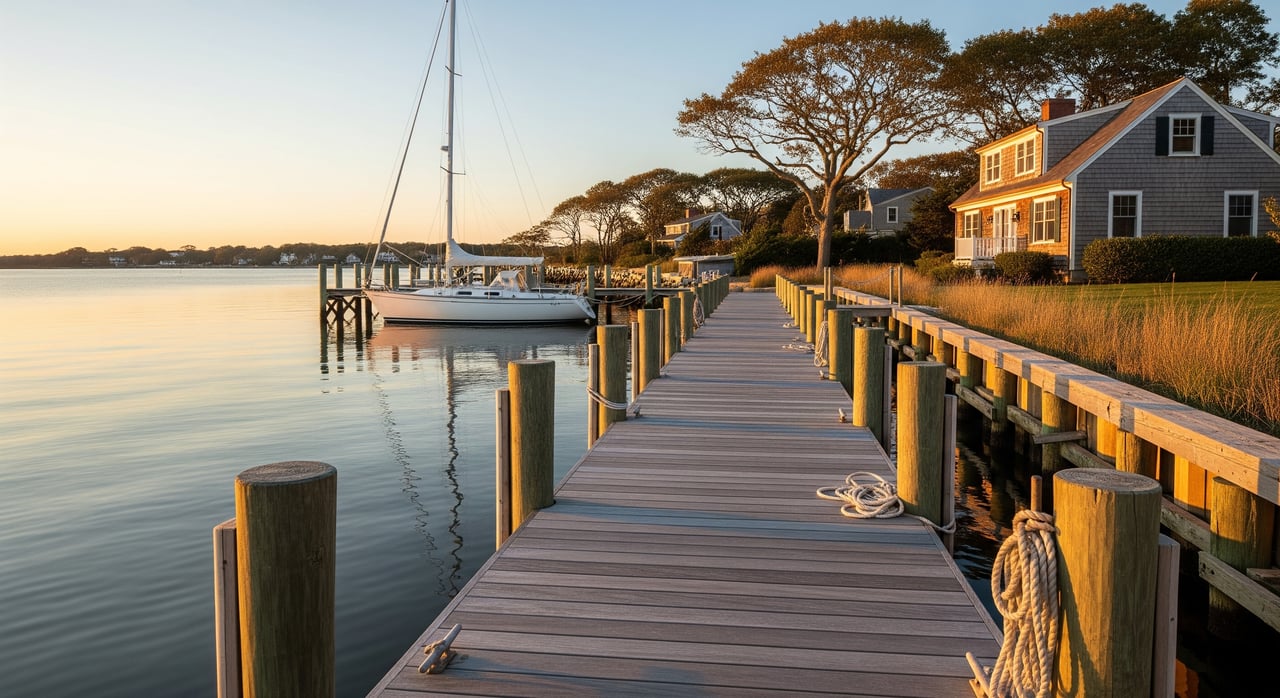
Branford Mooring Permits, Docks, and Thimble Islands Access
October 16, 2025
October 16, 2025
Thinking about dropping a mooring or building a dock in Branford? The rules are not always intuitive, and what looks simple from shore can involve multiple approvals. If you own, plan to buy, or want to sell waterfront property, understanding how moorings, docks, and littoral rights work will save you time and risk. This guide breaks down who regulates what, Branford’s current rules, and how to move forward with confidence. Let’s dive in.
The Branford Harbor Master assigns mooring locations, issues permits, and enforces local rules within Branford waters. The office can relocate or remove moorings and revoke privileges if you violate rules. You can review current jurisdiction, program notes, and enforcement updates on the town’s Harbor Master page.
Connecticut DEEP regulates docks and other structures seaward of mean high water and issues coastal permits. Depending on your project, DEEP may use general permits, Certificates of Permission, or individual permits. See the coastal permit program overview for the path your project is likely to follow.
The U.S. Army Corps of Engineers oversees navigation channels and federal anchorages. Moorings and docks cannot encroach on these areas and may require federal coordination for navigation impacts. DEEP, the town, and the Corps often work in parallel during review.
Branford runs a defined application window. You submit a written application to the Harbor Master between January 1 and March 1, listing your vessel details and up to three preferred locations. Permits are issued in April with assigned coordinates, and installation begins on or after May 1, per the town’s Moorings page.
Moorings may not be installed before May 1 and must be removed by November 15. You can use winter stakes, but ground tackle must be pulled and inspected at least every three years. Plan ahead so your gear is compliant before the boating season.
Mooring permits are valid for one year and are non-transferable. You cannot sell or lease a Branford mooring, and unregistered or misplaced moorings may be removed. Treat your permit as a regulated privilege rather than a permanent property right, as outlined on the town’s Moorings page.
Branford requires white mooring buoys with a centered blue band and clear identification. Your tackle and scope must be adequate, and lighting rules apply for anchored vessels. Moorings cannot interfere with fairways, docks, or federal channels.
Branford has announced a moratorium on new non-commercial moorings while addressing unpermitted gear and resource impacts. The Harbor Master enforces removals and may revoke privileges for violations. Always confirm the current moratorium status on the Harbor Master page before you plan on availability.
In Connecticut, waterfront owners have a littoral right to reasonable access to navigable water. That can support a dock or mooring, but the right is limited by public trust interests and resource protections. Review DEEP’s explanation of littoral rights and access to understand how the state balances private access with public resources.
DEEP’s Residential Dock Guidelines favor minimal designs, often a narrow pier to mean low water with a ramp and small float. Depending on site conditions, your project may qualify for a General Permit, a Certificate of Permission for maintenance or minor work, or an individual permit for larger impacts. Start with DEEP’s Residential Dock Guidelines to set expectations on size and placement.
Even with state authorization, your project may require local zoning, flood, and inland wetlands review. Branford’s building checklist points you to DEEP approval where structures extend below tidal thresholds. See the town’s building permit checklist for the steps that apply.
Many sites are limited to a single private dock per littoral property, and replacing post-1995 unpermitted docks can require individual permits. Site-specific resources like tidal wetlands or submerged vegetation can change what is approvable. For context on replacement and grandfathering, read the state’s overview of dock permitting history in the 2014 OLR report.
Confirm status with the Harbor Master
Verify claimed rights and permits
Check shellfish areas and closures
Confirm existing dock status
Review easements and shared access
Address maintenance, safety, and insurance
Understand fees and local funds
Start early. Confirm Branford’s application window, moratorium status, and any waiting list with the Harbor Master. For docks, review DEEP’s permit pathways and Branford’s local checklist to map out your timeline and approvals. If you are buying or listing a waterfront property, gather all permits and correspondence before negotiations so you can price and plan with confidence.
Have questions about how these rules affect your move, sale, or project timeline in Branford? Reach out to the local team that handles complex shoreline transactions with care. Connect with Frank D'Ostilio Houlihan Lawrence for clear guidance and a plan tailored to your goals.
Stay up to date on the latest real estate trends.






Experience the pinnacle of real estate expertise with the Frank D'Ostilio Team. From commercial ventures to residential dreams, trust in their proven track record of over 1,200 properties sold.